

7 Pro Tips for Capturing the Santos Tour Down Under
The Santos Tour Down Under is Australia’s premier cycling event and a highlight on the international calendar. Drawing thousands of spectators and elite cyclists from around the globe, it showcases South Australia’s vibrant culture and breathtaking landscapes. From the buzzing streets of Adelaide to the rolling hills and world-class vineyards of the Barossa Valley, this multi-stage race is a feast for the senses and a prime opportunity for photographers. Held annually in South Australia, it draws thousands of spectators and elite cyclists from around the world. Spanning multiple stages across stunning landscapes, from the vibrant streets of Adelaide to the rolling hills and picturesque vineyards of the Barossa Valley, the event is a spectacle of speed, endurance, and community spirit. Whether you’re a cycling enthusiast or simply captivated by the event’s energy, it’s an unmissable experience for photographers and fans alike. The event draws cycling enthusiasts and spectators from around the globe.
For photographers, it’s a prime opportunity to capture the thrill of the race, the vibrant atmosphere, and the stunning South Australian scenery. Whether you’re a professional photographer or a passionate hobbyist, Frankie the Creative has got you covered. As the chosen photographers for the Santos Tour Down Under, trusted by the South Australian Tourism Commission, we’ve compiled eight expert tips to help you make the most of your photography experience. Drawing from our extensive experience in covering this event, we’re here to share what works best.
Project Context
Event: Santos Tour Down Under
Location: Adelaide & regional South Australia
Type: Multi-stage international cycling race
Coverage Conditions: Live public event, multi-location, fast-moving subjects
Photography Focus: Sport, environment, crowd atmosphere, tourism storytelling
Challenges: Rapid movement, changing light, restricted access points, crowd density
1. Understand the Structure of the Event (Not Just the Race)
The Tour Down Under is not a single race environment — it is a sequence of visually and logistically distinct stages.
Each stage behaves differently photographically:
City circuits in Adelaide prioritise repetition and speed
Hill stages in the Adelaide Hills require anticipation and positioning
Regional vineyard routes in the Barossa introduce landscape scale and spacing
From a photography perspective, success comes from treating each stage as a different visual system rather than expecting a consistent shooting environment.


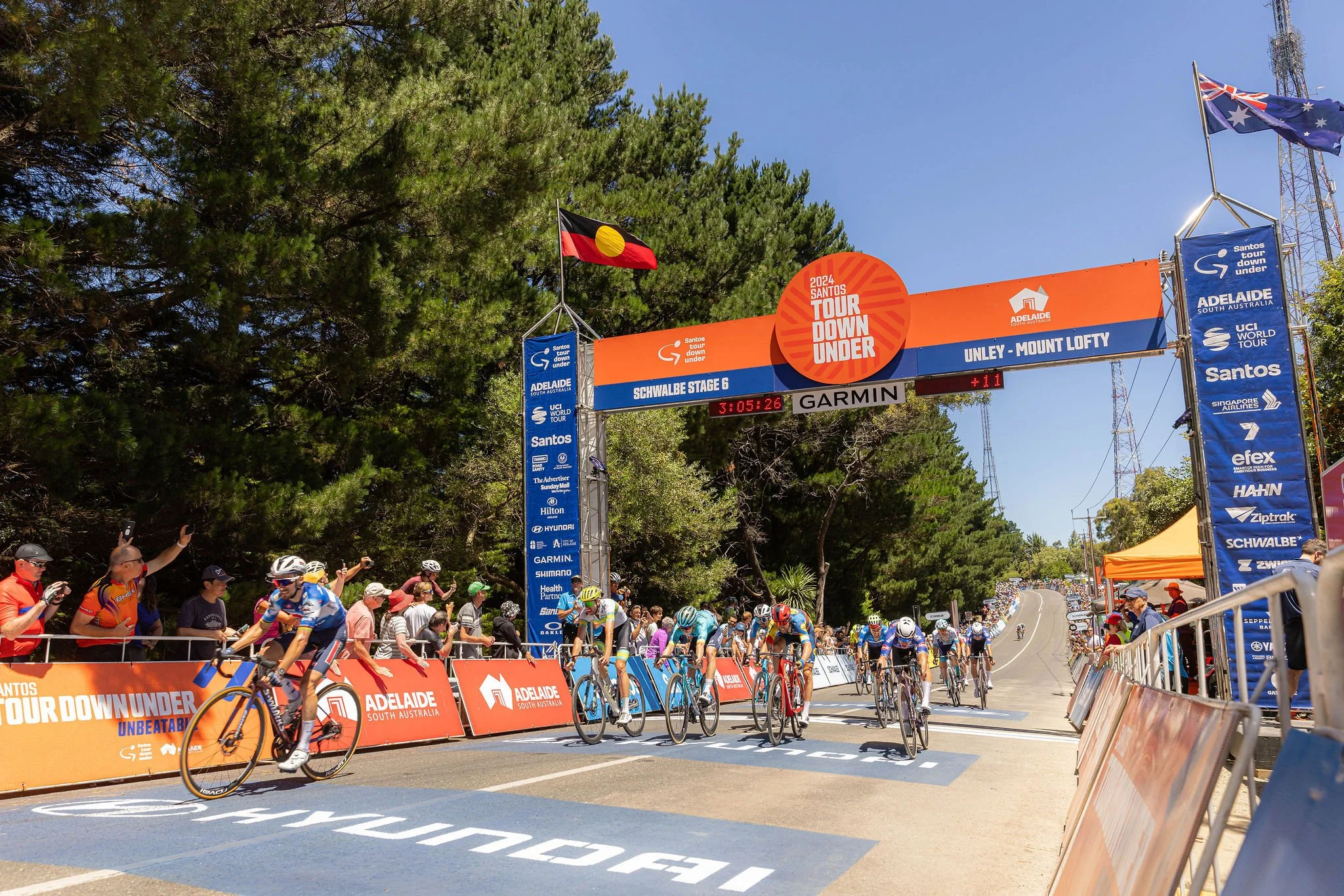
2. Positioning Is More Important Than Equipment
In live cycling coverage, position determines outcome more than gear.
The most effective images are rarely the result of heavy equipment changes — they come from anticipating rider movement and securing a stable position before peak action arrives.
Key considerations include:
access to bends and compression points in the race
elevation differences for depth in group pelotons
crowd-controlled viewing gaps for clean foreground separation
Once the race begins, repositioning opportunities are limited, making early placement essential.
3. Use Shutter Control as a Narrative Tool
Cycling photography operates across two distinct visual approaches:
High shutter speeds (freeze): isolate physical intensity, facial expression, and race detail
Panning techniques (motion blur): communicate speed and energy within the environment
Both approaches are used intentionally depending on stage type and available background separation.
City environments tend to favour freezing action due to cluttered backgrounds, while open regional stages allow for more expressive motion tracking.

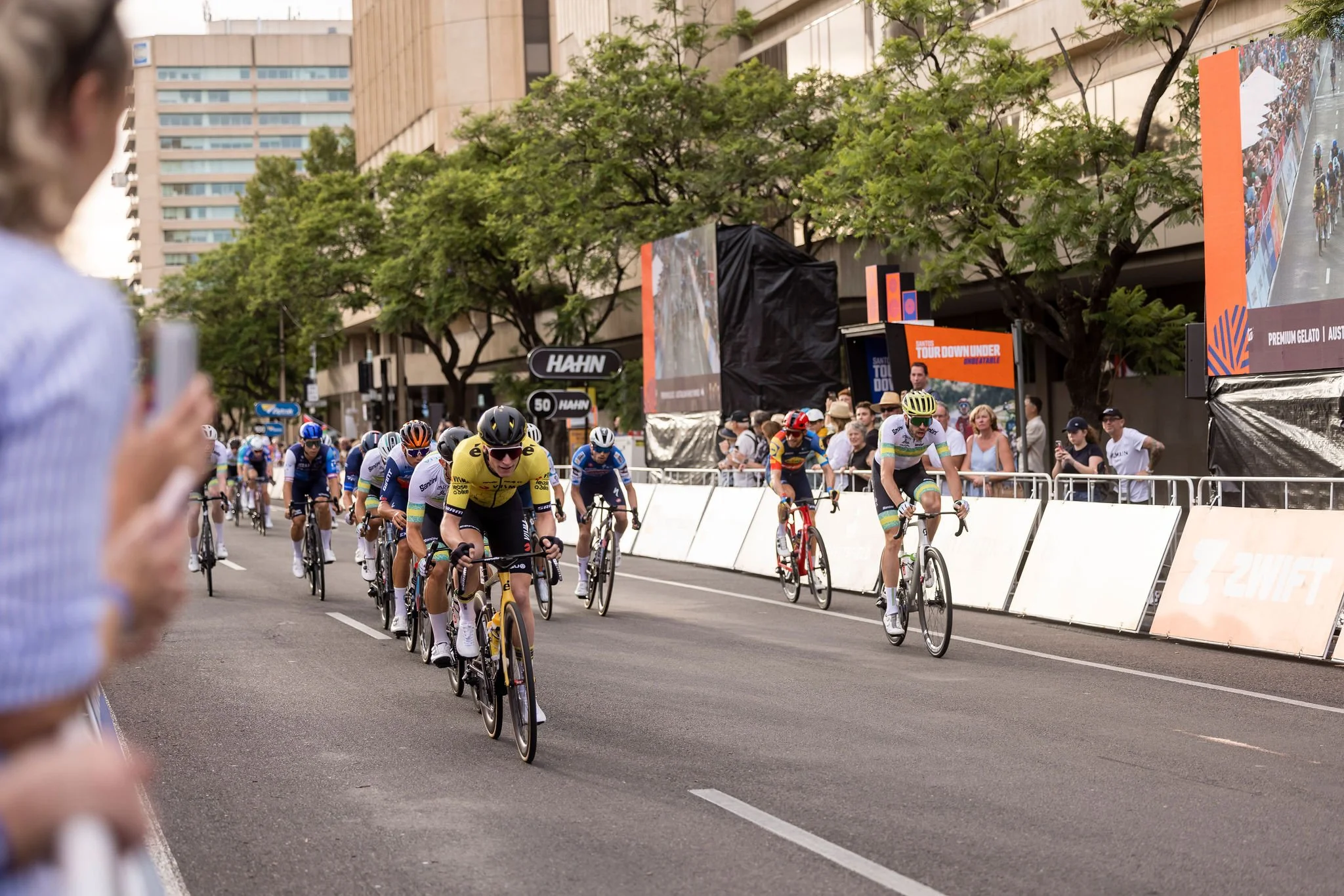

4. Treat the Event as Both Sport and Cultural Documentation
While the race itself is the focus, much of the visual story exists around it.
Crowds, roadside communities, and event infrastructure are not secondary — they are part of the commissioned narrative for tourism and regional storytelling.
At scale events like the Tour Down Under, imagery is often used across:
tourism campaigns
regional promotion
sponsor documentation
editorial coverage
This means environmental storytelling carries equal weight to race action.
5. Work with Layered Framing, Not Isolated Subjects
Strong cycling imagery rarely relies on a single subject in isolation.
More effective compositions often include:
riders within environmental context
spectators framing movement
signage, barriers, and road geometry guiding composition
landscape depth in regional stages
This layered approach is particularly effective in South Australian terrain, where geography becomes part of the visual identity of the event.


6. Anticipation Is the Core Technical Skill
In fast-moving cycling events, reaction time is often too slow to rely on.
Experienced event photographers work ahead of the action:
reading rider flow
predicting peloton compression points
understanding course design and gradients
This reduces reliance on burst shooting and improves the consistency of usable frames.
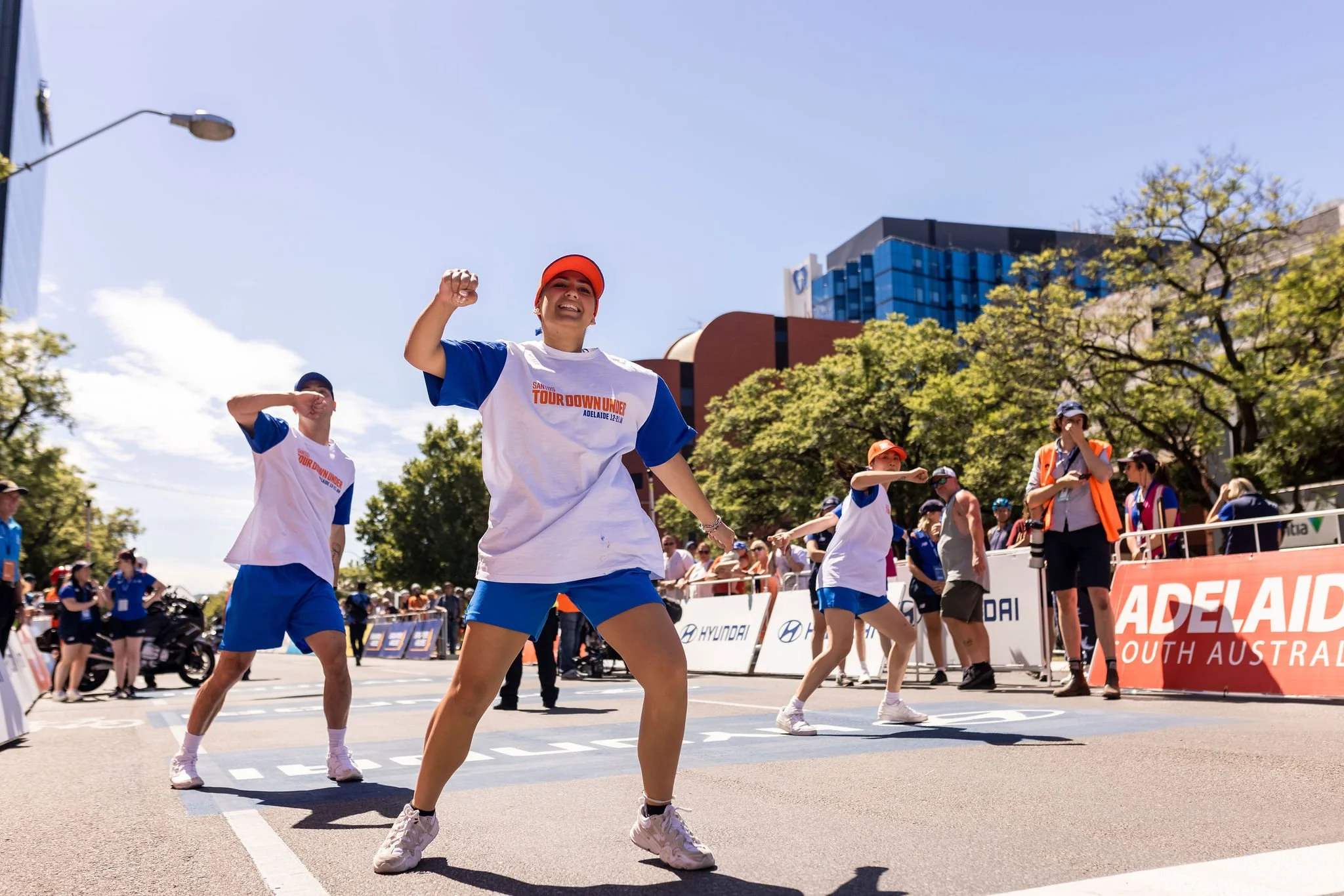


7. Capture the Event as a System, Not a Sequence of Moments
The strongest event coverage is not defined by individual images, but by how those images collectively represent the structure of the event.
At the Tour Down Under, this means balancing:
race intensity
environmental scale
public participation
regional identity
When combined effectively, the result is not just sports documentation, but a visual record of a South Australian cultural event with international reach.


Closing
The Santos Tour Down Under remains one of the most visually dynamic sporting events in Australia, requiring a balance of technical control, environmental awareness, and rapid decision-making.
For photographers working in live sporting environments, success is less about isolated technical settings and more about positioning, anticipation, and understanding how the event is structured across locations.
Frankie The Creative produces photography across sport, tourism, and large-scale public events throughout South Australia, focusing on real-time environments and documentary-driven visual storytelling.